1. What is Goji Berry Powder? Core Fundamentals
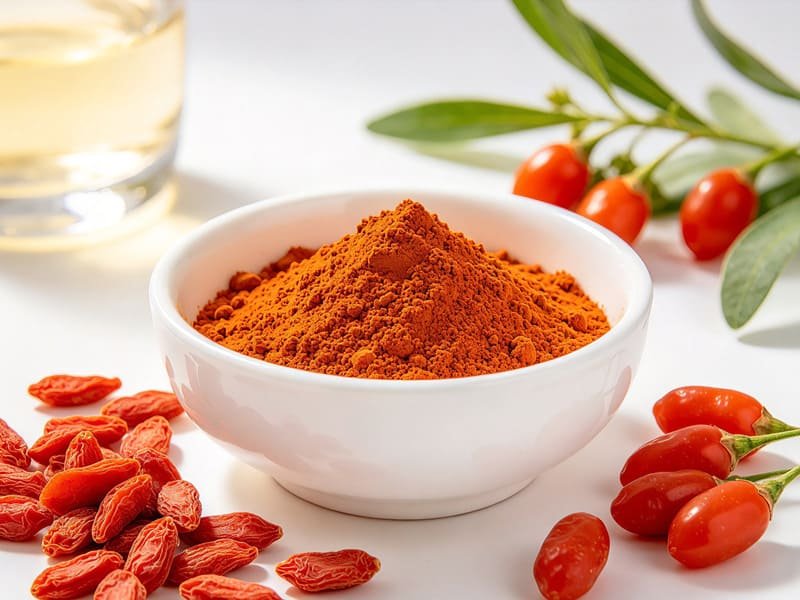
To truly understand Goji Berry Powder, we must look at how it bridges ancient herbal traditions and modern food science. Botanically classified as the fruit of Lycium barbarum L. or Lycium chinense Mill., the berry is known worldwide by several names, including wolfberry, Gou Qi Zi, and Chinese boxthorn. In its natural form, the fresh berry is oblong, bright red, and soft. However, fresh goji berries are perishable and spoil quickly outside their native harvest zones.
For centuries, the only way to export these berries was by drying them in the sun until they shrank into small, chewy, raisin-like fruits. While dried berries remain popular, their tough texture can be difficult to chew, and their hard outer skin resists breaking down in liquids. Goji Berry Powder solves this issue entirely. By taking prime dried or fresh berries and milling them down to an ultra-fine particle size (typically between 80 and 120 mesh), processors create a smooth, free-flowing ingredient that disperses readily into water, smoothies, yogurts, and dry formulations.
Sensory Profile and Physical Attributes
- Appearance and Hue: High-quality powder displays a deep reddish-orange to bright crimson color. This hue comes directly from natural carotenoid pigments like zeaxanthin and beta-carotene, without artificial dyes.
- Aroma and Flavor: The powder carries a pleasant, sweet-tart aroma. On the palate, it delivers a balanced, fruity flavor that combines cranberry, dark cherry, and a mild hint of sweet tomato with a subtle earthy undertone.
- Texture and Dispersion: Ground under temperature-controlled conditions, the powder feels soft and silky. It dissolves and suspends cleanly in liquids, leaving behind only light, natural fruit pulp that confirms its whole-food origin.
- Comedogenic Profile for Cosmetics: In topical skincare, pure goji fruit powder holds a comedogenic rating of 0 to 1, meaning it delivers dense nutrients without clogging pores or causing blemishes.
“Goji Berry Powder takes an ancient superfruit and turns it into a modern functional ingredient. It delivers all the fiber, vitamins, and unique polysaccharides of whole berries in an instant, easy-to-use form.”
2. Botanical Origins, Taxonomy, and Terroir
Goji belongs to the nightshade family, known botanically as Solanaceae. That means it shares a genetic family tree with familiar garden crops like tomatoes, potatoes, eggplants, and sweet bell peppers. Within the genus Lycium, over 70 species grow around the world, but only two are recognized for their therapeutic and food value in the historical pharmacopoeias: Lycium barbarum and Lycium chinense.
Distinguishing Key Botanical Species
While both plants produce red berries, they serve slightly different purposes in agriculture and herbal tradition:
- Lycium barbarum L.: Grown primarily in northern China. This woody perennial shrub grows 1 to 3 meters tall, producing sweet, oblong, bright orange-red berries. It is the dominant commercial species because its berries contain the highest levels of active polysaccharides and carotenoids.
- Lycium chinense Mill.: Common across southern China. It grows slightly shorter with smaller, rounder berries and bitter leaves. In traditional Asian cooking, its tender young spring shoots and leaves—known as “Tian jing cao” or sacred herb—are harvested for medicinal teas and nourishing green vegetable soups.
- Lycium ruthenicum Murr.: Commonly known as Black Goji. Native to wild desert soils, this species yields small purple-black berries packed with oligomeric proanthocyanidins (OPCs), though it lacks the sweet-tart flavor profile of classic red goji.
The Power of Terroir: Why Ningxia Matters
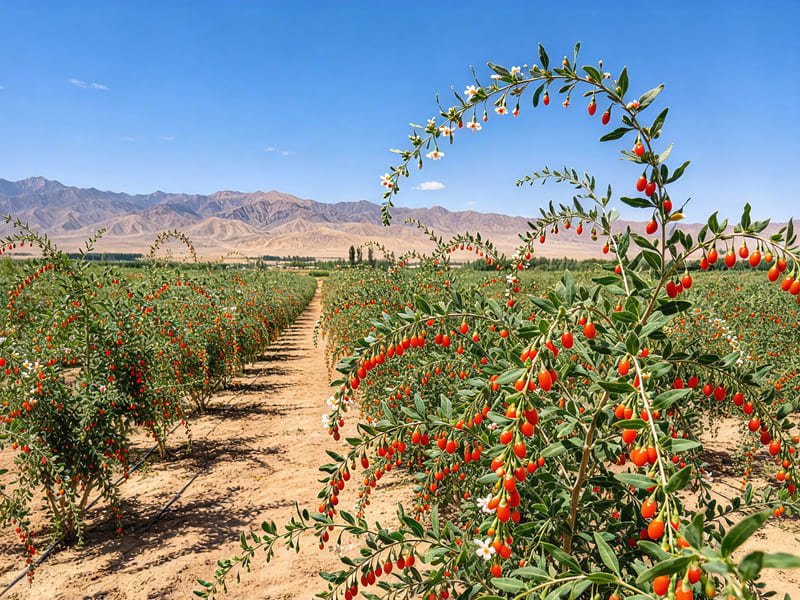
Just as wine grapes depend on the soil and climate of their region, goji berries draw their unique chemistry from their geographic home. The premier, historically certified growing zone for goji is the Ningxia Hui Autonomous Region in northwest China, along the upper basin of the Yellow River.
Ningxia provides an exceptional natural environment for wolfberry cultivation:
- Sunlight and Temperature: The region enjoys over 3,000 hours of intense annual sunshine with dramatic temperature swings between warm days and cold nights. This climate stresses the plant just enough to encourage high production of protective sugars and pigments.
- Alkaline Soil and Glacier Runoff: The soil along the Yellow River floodplain is naturally alkaline, loamy, and packed with trace minerals. Irrigating with clean runoff from high mountain plateaus enriches the berries with calcium, zinc, iron, and selenium.
- Higher Polysaccharide Content: Comparative clinical research published in food science journals confirms that berries grown in Ningxia synthesize higher levels of Lycium barbarum polysaccharides—averaging 46.8 g per kilogram of dry fruit, compared to just 38.2 g/kg in berries grown in other areas.
| Botanical Species / Origin | Common Name | Native Geographic Terroir | Primary Phytochemical Markers | Sensory & Culinary Profile | Primary Commercial Application |
|---|---|---|---|---|---|
| Lycium barbarum L. (Ningxia) | Red Goji / Ningxia Wolfberry | Yellow River Basin, Ningxia, China | High LBP (46.8 g/kg), Zeaxanthin Dipalmitate | Sweet, mildly tart, pleasant fruity chew | Premium whole powder, eye supplements, beverages |
| Lycium barbarum (Qinghai Plateau) | Tibetan Goji Berry | High altitude (>3,000m), Qinghai, China | High Carotenoids, Vitamin C, Flavonoids | Slightly less sweet, dense antioxidant skin | Freeze-dried organic powders, superfood mixes |
| Lycium chinense Mill. | Southern Wolfberry / Kuko | Southern & Eastern China, Japan | Rutin, Chlorogenic Acid, Betaine | Subtle herbal bitterness, thin berry pulp | Herbal leaf teas, traditional decoctions, liver tonics |
| Lycium ruthenicum Murr. | Black Wolfberry / Black Goji | Qaidam Basin desert, Northwest China | Proanthocyanidins (OPCs), Anthocyanins | Mild, earthy, deep indigo-blue color release | Color-changing herbal teas, cellular anti-aging |
3. Comprehensive Nutritional Architecture
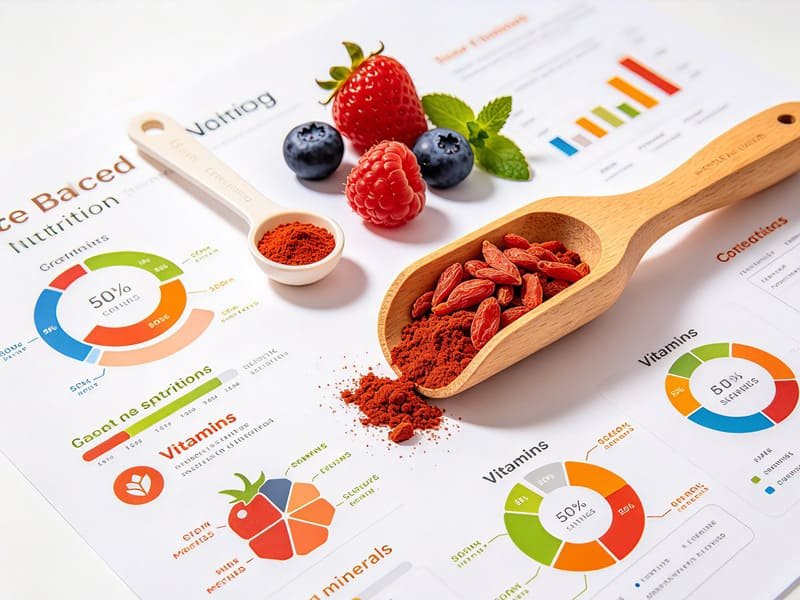
When nutritional scientists examine Goji Berry Powder, they find a nutrient density that few dried fruits can match. Fresh fruits are typically composed mostly of water and simple sugars, with very little protein. Goji berries break this rule completely. They supply dense macronutrients, all essential amino acids, non-heme iron, and protective vitamins in every scoop.
A Rare, High-Protein Fruit Matrix
One of the most surprising facts about goji powder is its protein content. Dry goji powder contains between 12% and 16% complete protein by weight. A single 28-gram serving (about 5 tablespoons) delivers roughly 4 grams of clean plant-based protein. That means approximately 16% of its total calories come directly from amino acids.
Even more impressive is the quality of that protein. Goji powder contains 18 different amino acids, including all eight essential amino acids that our bodies cannot make internally:
- Leucine, Isoleucine, and Valine: Branched-chain amino acids (BCAAs) that help repair muscle tissue and reduce post-exercise soreness.
- Lysine and Threonine: Essential building blocks for structural collagen and antibody production.
- Methionine, Phenylalanine, and Tryptophan: Precursors for neurotransmitters like serotonin, which supports steady mood and restful sleep.
Balanced Carbohydrates and Dietary Fiber
A standard 28-gram serving contains approximately 21.6 grams of total carbohydrates, with 3.6 grams of dietary fiber. These fibers include soluble and insoluble pectins that slow digestion and support beneficial gut bacteria. The remaining carbohydrates consist of natural fruit sugars (roughly 50% glucose, 45% fructose, and 5% sucrose). Because its complex polysaccharides slow sugar absorption, goji powder avoids the sharp insulin spikes common with high-fructose dried fruits like raisins, dates, or sweetened cranberries.
Vitamins and Essential Trace Minerals
Goji Berry Powder provides an exceptional concentration of essential micronutrients:
- Vitamin A (Beta-Carotene): Delivers 2,500 to 7,500 IU (140% to 250% Daily Value) per ounce. Because it comes from plant carotenoids, your body converts only what it needs into Vitamin A, offering all the benefits of retinol without the toxicity risks of synthetic supplements.
- Vitamin C & AA-2$\beta$G: Provides roughly 13.6 mg of standard Vitamin C per serving, accompanied by a stable, natural analog called 2-O-$\beta$-D-glucopyranosyl-L-ascorbic acid. This bound form resists heat breakdown during drying and releases active ascorbic acid slowly during digestion.
- Non-Heme Iron: Supplies roughly 1.9 mg of bioavailable iron (11% to 15% DV) per ounce. Ounce for ounce, goji berries contain more dietary iron than soybeans and fresh spinach, making them a smart choice for supporting healthy red blood cells.
- Trace Minerals: Packed with protective zinc, copper, manganese, calcium (53.2 mg), and selenium (supplying roughly 25% DV). Selenium acts as a cofactor for the body’s natural antioxidant defense systems.
| Nutritional Component | Amount Per 10 g Serving (1 Tbsp) | Amount Per 28 g Serving (1 Ounce) | % Daily Value (2,000 Calorie Diet) |
|---|---|---|---|
| Calories | 35 kcal | 98 – 100 kcal | 5% |
| Total Protein | 1.4 g | 4.0 g | 8% |
| Total Carbohydrates | 7.5 g | 21.6 g | 8% |
| Dietary Fiber | 1.3 g | 3.6 g | 13% |
| Total Sugars (Natural) | 4.5 g | 12.8 g | No Added Sugars |
| Total Fat | 0.05 g | 0.1 g | < 1% |
| Vitamin A (Beta-Carotene) | 2,680 IU | 7,500 IU | 150% – 250% |
| Vitamin C (Total Ascorbic Pool) | 4.8 mg | 13.6 mg | 15% – 20% |
| Iron (Non-Heme Fe) | 0.7 mg | 1.9 mg | 11% – 15% |
| Calcium | 19.0 mg | 53.2 mg | 4% |
| Selenium | 5.0 mcg | 14.0 mcg | 25% |
4. The Phytochemical Powerhouse: LBPs, Zeaxanthin, and Betaine
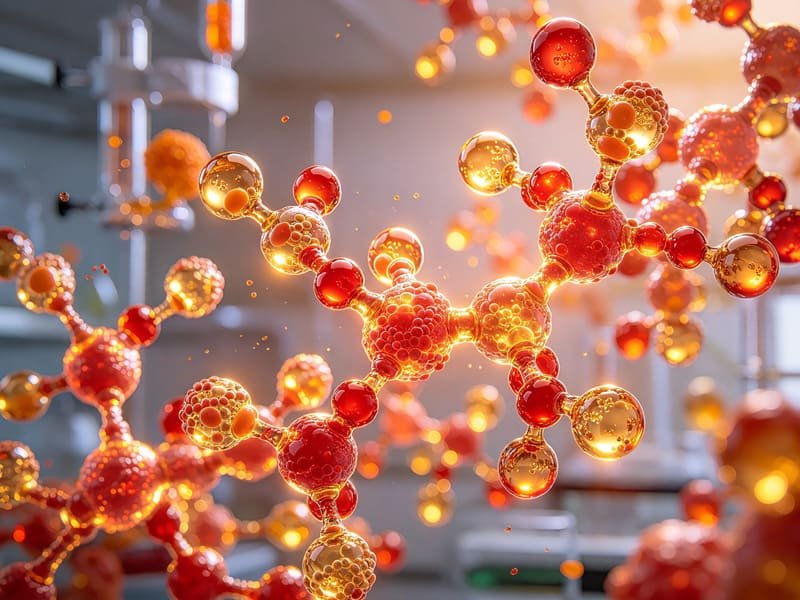
Beyond traditional vitamins and minerals, the true health benefits of Goji Berry Powder stem from its specialized plant compounds. These biologically active molecules, developed naturally to protect the fruit from high-altitude sun radiation, work as gentle regulators inside human cells.
Lycium Barbarum Polysaccharides (LBP)
If you ask a pharmacologist why goji berries work, their first answer will be Lycium barbarum polysaccharides (LBPs). These water-soluble, branched proteoglycans make up roughly 20% to 50% of standardized goji extract powders. Their molecular weights range from 10 to 2,300 kilodaltons.
Chromatography shows that LBPs consist of complex neutral sugars—including arabinose, galactose, glucose, xylose, mannose, and rhamnose—covalently linked to active peptide chains. Researchers have identified several distinct polysaccharide fractions with specific roles:
- LBP-1: A neutral polysaccharide composed mainly of arabinose and galactose that helps regulate healthy cellular growth through the PI3K/Akt signaling pathway.
- LBP3b: A glycopeptide fraction that supports healthy glucose metabolism by moderating glucose absorption in the small intestine.
- PLBP-II-I: A pectic polysaccharide rich in galacturonic acid that stimulates the body’s natural antioxidant enzymes, helping protect cells from oxidative stress.
Zeaxanthin Dipalmitate: The Natural Retinal Shield
Goji berry powder owes its bright orange-red color to carotenoids, delivering between 120 and 400 mg of total carotenoids per 100 grams of ripe fruit. The dominant carotenoid is zeaxanthin dipalmitate (ZDP), historically referred to as “goji berry red pigment.”
In nature, zeaxanthin is often fragile and oxidizes quickly. In goji berries, however, zeaxanthin is naturally esterified with two palmitic acid molecules. This natural lipid bond shields the molecule, making it remarkably stable against heat, light, and stomach acid. When consumed, your digestive enzymes release free zeaxanthin, which travels directly into your bloodstream and settles in your eyes to protect the macula.
Betaine: The Cellular Methyl Donor
Goji fruit contains meaningful levels of betaine (trimethylglycine), ranging from 1.4% to 2.6%. In human biochemistry, betaine serves as a vital methyl donor in the methionine cycle, helping convert harmful homocysteine into safe amino acids to support heart health. Furthermore, laboratory studies suggest betaine acts as an osmoprotectant, shielding cellular DNA and helping prevent the premature shortening of telomeres—the protective caps on our chromosomes that wear down as we age.
| Phytochemical Class | Specific Active Compounds | Natural Concentration in Powder | Primary Human Physiological Mechanism |
|---|---|---|---|
| Glycoconjugate Polysaccharides | LBP-1, LBP3b, PLBP-II-I | 20% – 50% Standardized | Activates macrophages and T-cells; balances cellular immune response |
| Xanthophyll Carotenoids | Zeaxanthin Dipalmitate, Lutein | Up to 500 mg / 100g | Crosses blood-retina barrier; filters blue light and protects the macula |
| Provitamin A Carotenes | Beta-Carotene, Cryptoxanthin | 120 – 400 mg / 100g | Scavenges free radicals; converts safely to Vitamin A for skin cell renewal |
| Ascorbic Acid Analogues | 2-O-β-D-glucopyranosyl-L-ascorbic (AA-2βG) | 40 – 280 mg / 100g | Heat-stable Vitamin C precursor; delivers sustained antioxidant defense |
| Natural Betaines | Trimethylglycine (Betaine) | 1.4% – 2.6% dry weight | Supports homocysteine balance, liver lipid transport, and DNA stability |
| Flavonoids & Phenolics | Rutin, Quercetin, Chlorogenic Acid | 20 – 35 mg / g | Protects capillaries, supports balanced blood pressure, and calms inflammation |
5. Powder Formats Compared: Whole vs. Juice vs. Extract
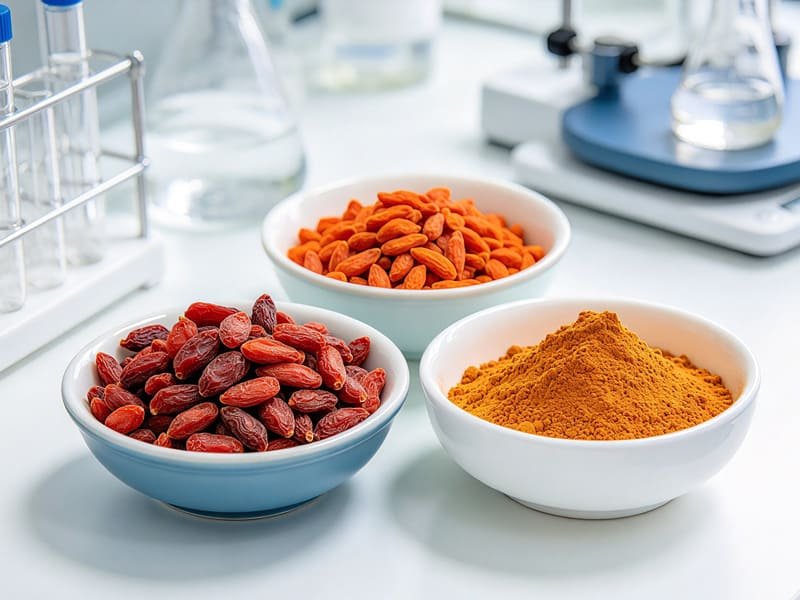
When shopping for goji ingredients, consumers and formulators often run into confusion. Labels display terms like “Whole Fruit Powder,” “Freeze-Dried Goji,” “Goji Juice Powder,” and “Standardized Goji Extract.” While they all start from the same berry, their processing methods create distinct nutritional and functional products.
1. Organic Freeze-Dried Whole Goji Berry Powder
This format is produced by taking fresh, ripe whole berries, rapidly freezing them to between -40°C and -54°C, and placing them inside a high-vacuum sublimation chamber. The frozen water turns directly from ice into vapor, bypassing the liquid phase entirely. The dried berries are then milled under chilled conditions into a fine 80 to 120-mesh powder.
- The Big Advantage: Because it avoids high heat, freeze-drying preserves roughly 92% of the berry’s natural Vitamin C, delicate carotenoid bonds, dietary fiber, and natural enzymes.
- Best Used For: Daily breakfast smoothies, smoothie bowls, functional oatmeal, energy bites, and clean-label foods where you want the full, unadulterated fruit matrix.
2. Spray-Dried Goji Berry Juice Powder
To make juice powder, fresh goji berries are pressed into a liquid juice. The insoluble skins, seeds, and heavy fibers are filtered out, leaving a clear liquid. This juice is then flash-atomized in a hot-air drying tower, often alongside a small amount of clean carrier like organic maltodextrin to keep it from caramelizing into a sticky paste.
- The Big Advantage: It offers exceptional water solubility. It dissolves in cold water in under 30 seconds with minimal residue, delivering a bright color and clean, sweet flavor.
- Best Used For: Instant beverage stick-packs, powdered sports drink mixes, effervescent tablets, and clear teas where you want no gritty fruit pulp at the bottom of the glass.
3. Standardized Goji Extract Powder
Extract powders take a different route. Whole berries undergo solvent extraction using warm water or food-grade ethanol to pull out specific active compounds. The liquid is filtered, concentrated under vacuum, and dried into a standardized powder calibrated to contain 20%, 40%, or 50% Lycium barbarum polysaccharides (LBP).
- The Big Advantage: Maximum therapeutic strength per gram. A single small 500-milligram capsule can deliver the active polysaccharide equivalent of a large handful of fresh berries, with all the bulk sugars removed.
- Best Used For: Clinical dietary supplements, two-piece hard capsules, compressed tablets, and targeted immune formulations.
| Commercial Product Format | Manufacturing Technology | Active Bioactive Concentration | Water Solubility & Dispersion | Dietary Fiber Content | Ideal Best-Fit Application |
|---|---|---|---|---|---|
| Freeze-Dried Whole Powder | Vacuum sublimation at -50°C & cryogenic milling | 15% – 25% Native LBP; 92% Vitamin C retention | Disperses smoothly; leaves light, natural fruit pulp | High (~10% – 14%) | Smoothies, meal replacement shakes, energy bars |
| Spray-Dried Juice Powder | Fresh juice pressing, filtration & rapid spray drying | Moderate (concentrated water-soluble fractions) | Instant, complete dissolution (<30s) | Very Low (fiber removed) | RTD beverage stick-packs, sports drinks, clear teas |
| Standardized Extract Powder | Targeted aqueous extraction & vacuum concentration | Very High (≥20% to 50% LBP) | High to complete in warm water | Negligible | Dietary supplement capsules, clinical tablets |
| Whole Sun-Dried Berries | Traditional ambient air/sun drying on bamboo mats | Unstandardized natural fruit variance | Requires 1–2 hours of water soaking to soften | Whole fruit matrix | Snacking, trail mixes, slow-simmered herbal broths |
6. Evidence-Based Health Benefits & Clinical Research
 In modern integrative wellness, superfoods must prove their worth through peer-reviewed science. Over the last two decades, academic institutions across Europe, the United States, and Asia have conducted rigorous clinical trials investigating the specific physiological benefits of Lycium barbarum.
6.1 Ophthalmic Health: Filtering Blue Light and Protecting Vision
Age-related Macular Degeneration (AMD) stands as a leading cause of vision loss in older adults, affecting over 11 million people in the United States alone. The condition occurs when protective macular pigments break down, leaving light-sensitive retinal cells vulnerable to oxidative damage.
A benchmark double-blind clinical trial published in the journal Nutrients (Li et al., 2021) evaluated healthy adults aged 45 to 65. Participants consumed 28 grams of goji berries five times weekly for 90 days. The researchers found that goji consumption significantly increased protective Macular Pigment Optical Density (MPOD) in the retina. In contrast, participants taking standard commercial lutein supplements showed no measurable change. The unique fatty-acid esters of zeaxanthin in goji berries allow for superior trans-retinal uptake, helping eyes filter out high-energy digital blue light and defend against retinal thinning.
6.2 Immune System Resilience and Vaccine Defense
Goji berry polysaccharides act as gentle immunomodulators. Rather than over-stimulating the immune system, they help regulate defense cells based on real-time biological needs.
In a controlled clinical study involving 150 older adults, daily goji berry supplementation significantly enhanced immune responsiveness following seasonal influenza vaccination. Compared with the placebo group, participants consuming goji showed higher protective antibody seroconversion titers and elevated white blood cell activity. Other randomized trials report that individuals consuming goji products daily experienced approximately 40% fewer seasonal upper respiratory episodes during winter months.
6.3 Cardiometabolic Balance and Glycemic Regulation
Modern clinical meta-analyses confirm that goji polysaccharides support healthy blood lipids and glucose metabolism. A comprehensive review published in the Journal of the American College of Nutrition analyzed multiple randomized controlled trials:
- Lipid Profile Optimization: Daily LBP supplementation over 3 months led to statistically significant reductions in serum total cholesterol, lower triglycerides ($-0.455$ mmol/L), and lower LDL cholesterol ($-0.525$ mmol/L), alongside a notable increase in beneficial HDL cholesterol ($+1.114$ mmol/L).
- Support for Type 2 Diabetes: In a double-blind trial of 67 adults with type 2 diabetes, daily intake of 300 mg of purified LBP over 3 months lowered postprandial glucose spikes and improved the insulinogenic index, supporting healthy insulin sensitivity.
6.4 Dermal Longevity and Skin Radiance
Healthy skin requires both internal nutrition and external defense. Goji berry powder provides high levels of natural Vitamin C and AA-2$\beta$G, two essential cofactors that human enzymes need to produce structural Collagen Types I and III. Furthermore, dietary carotenoids migrate directly into subcutaneous fat layers, acting as an internal sunscreen that neutralizes free radicals generated by UV exposure and pollution, helping soothe redness and prevent premature fine lines.
6.5 Cognitive Focus, Mood, and the Gut-Brain Axis
Can a berry improve your mental outlook? A randomized, placebo-controlled study conducted in 29 adolescents with subthreshold depression revealed that six weeks of daily goji polysaccharide supplementation produced a statistically significant reduction in depressive symptoms ($P=0.014$), higher remission rates, and measurable improvements in cognitive focus and energy. At the same time, animal and human trials show that goji polysaccharides act as prebiotics in the gut, feeding beneficial short-chain fatty acid (SCFA) producing bacteria that communicate with the central nervous system via the vagus nerve.
7. Food Science, Color Stability & Flavor Chemistry

In modern food technology, replacing artificial synthetic colors (like Red 40 and Yellow 5) with natural plant pigments is a top priority. However, many fruit powders present severe formulation hurdles. Anthocyanin-rich berry powders like blueberry, blackberry, and acai are fragile: they break down into dull brown shades when heated and shift from red to murky purple when the pH changes.
Why Goji Carotenoids Outperform Anthocyanins
Goji Berry Powder avoids these formulation pitfalls because its color comes from fat-soluble carotenoids rather than water-soluble anthocyanins:
- Thermal Processing Resistance: Carotenoids in goji powder easily withstand pasteurization temperatures (85°C to 95°C) and commercial baking conditions (180°C / 356°F for 20 minutes) without losing their vibrant red-orange color.
- pH Stability Across Formulas: While berry anthocyanins turn blue or brown in neutral formulas, goji carotenoids stay a steady, attractive orange-red across the entire pH spectrum—from acidic fruit juices (pH 3.5) all the way to neutral dairy and plant milks (pH 6.5 to 7.0).
- Natural Flavor Masking: Plant protein isolates (such as pea, hemp, and brown rice) often carry bitter, beany off-notes that consumers dislike. The natural sweet-tart profile of goji powder (Brix 12–15) smooths out these harsh notes, masking the metallic taste of iron and zinc without requiring synthetic sweeteners.
8. Commercial Product Formulations & Applications
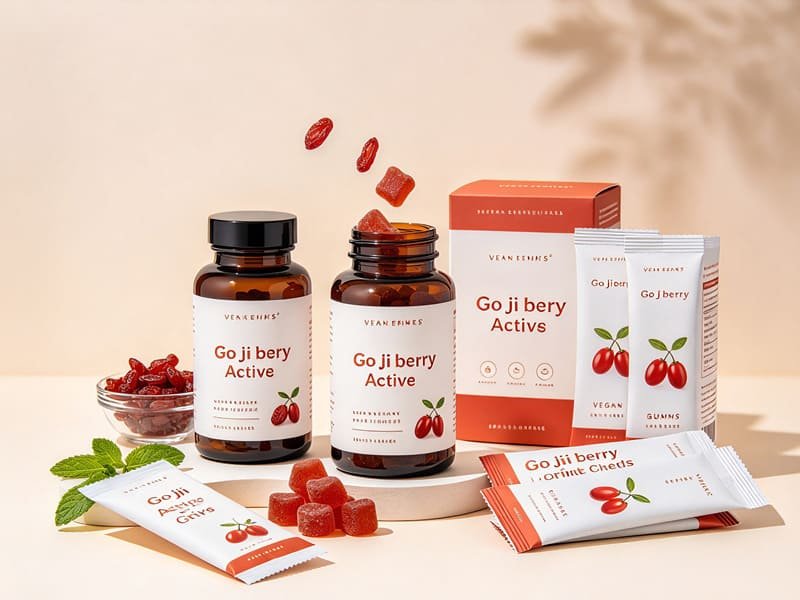
Thanks to its balanced solubility, rich color, and stable active profile, Goji Berry Powder serves as a versatile hero ingredient across diverse wellness categories:
1. Functional Solid Beverages and Stick-Packs
Modern consumers love convenient, single-serve wellness stick-packs. Spray-dried goji juice powder disperses cleanly into cold water, delivering natural electrolytes, Vitamin C, and antioxidants. Formulators often blend goji powder with elderberry extract, acerola cherry, and zinc for daily immune defense drink mixes.
2. Eye Wellness Gummies and Soft Chews
Gummies are one of the fastest-growing supplement formats. Goji powder’s natural fruit sugars and tartness blend easily into pectin-based gummy recipes. Combining goji powder with lutein, marigold extract, and bilberry creates delicious “Screen Time Relief” gummies tailored for digital workers and students.
3. Sports Recovery and Plant Protein Powders
In clean athletic nutrition, goji powder provides complete amino acids, bioavailable iron, and fatigue-reducing polysaccharides. Blending 2% to 5% goji powder into vanilla or berry plant-protein powders improves the flavor, adds a warm color, and accelerates post-workout muscle recovery.
4. Nutricosmetic Beauty Elixirs and Clay Masks
In topical and ingestible beauty lines, ultra-fine 200-mesh goji powder is added to marine collagen drink sachets, hydrating cream face masks, and gentle exfoliating body scrubs. Its rich carotenoids and Vitamin C promote skin cell turnover, fade dark spots, and protect against urban pollution.
9. Culinary Integration, Recipes, and Dosage
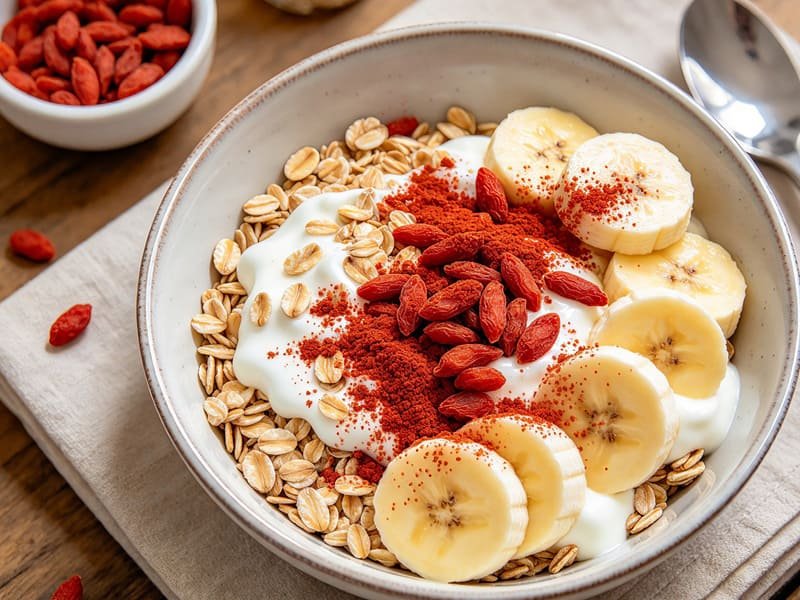
Bringing the benefits of Goji Berry Powder into your daily meals is simple. Because it is finely milled and ready to use, there is no need to pre-soak or chop rock-hard berries before adding them to your favorite recipes.
Standard Recommended Daily Dosages
- Whole Freeze-Dried Goji Powder: Take 1 to 2 tablespoons daily (roughly 10 to 30 grams). This supplies a therapeutic dose of zeaxanthin, complete amino acids, and active polysaccharides without excess calories.
- Standardized Goji Extract Powder (≥40% LBP): Take 300 to 1,000 milligrams daily, typically in capsules or mixed into a concentrated wellness shot.
Easy Everyday Kitchen Recipes
1. The Morning Ocular Shield Smoothie
- 1 tablespoon of Organic Freeze-Dried Goji Berry Powder
- 1 cup frozen dark sweet cherries or wild blueberries
- 1 ripe organic banana
- 1 cup unsweetened almond milk or coconut water
- 1/2 teaspoon ground cinnamon
- Instructions: Blend all ingredients on high for 45 seconds until velvety smooth. Enjoy immediately for clean morning energy and blue-light eye protection.
2. Adaptogenic Goji & Chia Seed Pudding
- 1 tablespoon Goji Berry Powder
- 1/4 cup whole black chia seeds
- 1 cup oat milk or cashew milk
- 1 teaspoon pure vanilla extract and 1 tablespoon raw maple syrup
- Instructions: Whisk all ingredients thoroughly in a glass jar. Chill in the refrigerator for at least 4 hours (or overnight). The chia seeds will expand into a creamy, nutrient-packed pudding.
3. High-Energy Goji Protein Bites
- 2 tablespoons Goji Berry Powder
- 1 cup pitted Medjool dates
- 1/2 cup raw almonds or walnuts
- 1/4 cup shredded unsweetened coconut
- 1 tablespoon creamy almond butter
- Instructions: Pulse ingredients in a food processor until a sticky dough forms. Roll into 1-inch balls and roll in shredded coconut. Refrigerate for a convenient, portable workout snack.
10. Manufacturing Science & Quality Control
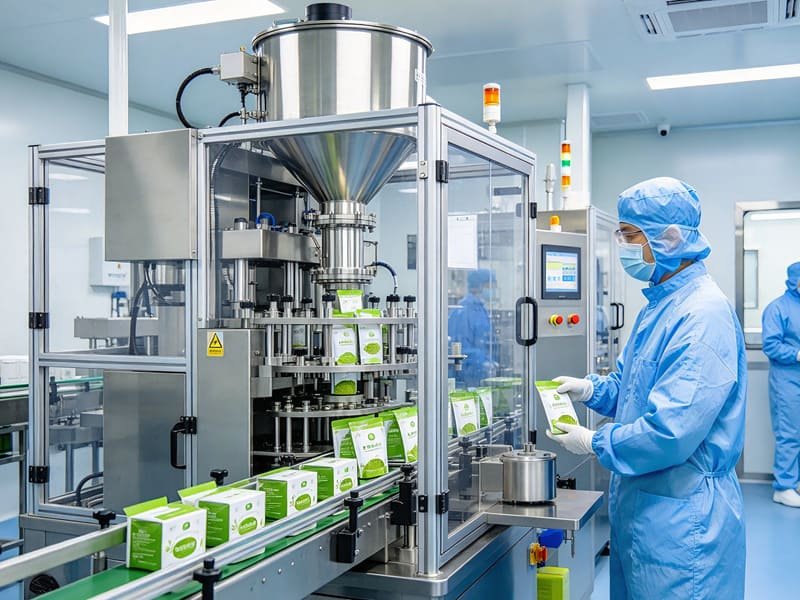
Because goji berries have become so popular worldwide, the market has attracted lower-quality operators looking to cut corners. Sourcing managers and conscientious consumers must understand the rigorous quality benchmarks that separate pure goji powder from diluted commodity substitutes.
Common Adulteration Traps in Low-Cost Powders
- Maltodextrin and Starch Bulking: Some suppliers secretly dilute whole goji powder with 10% to 30% cheap maltodextrin to lower their production costs and prevent clumping. While maltodextrin is sometimes used legitimately as a carrier in spray-drying, it should always be declared clearly on the label. Authentic whole-fruit goji powder should list only one ingredient: Organic Goji Berry Powder.
- Synthetic Colorant Spiking: Low-grade or old berries that have turned pale or brown are sometimes artificially colored with synthetic chemical dyes (such as Allura Red or chemical carmine) to fake freshness.
- Sulfur Dioxide Bleaching: In conventional agriculture, whole dried fruits are often treated with sulfur dioxide gas to maintain an artificial neon-red color. Certified organic standards strictly forbid sulfur dioxide, capping any trace residues below 10 ppm.
International Quality Testing Benchmarks
High-grade commercial Goji Berry Powder must satisfy strict international safety standards verified through independent third-party laboratories:
| Quality Parameter | Standard Acceptance Specification | Testing Methodology | Safety & Compliance Significance |
|---|---|---|---|
| Polysaccharide Content (LBP) | ≥ 20.0% – 50.0% Standardized | UV-Vis Spectrophotometry | Verifies active immunomodulatory and therapeutic potency |
| Heavy Metal Limits (USP) | Arsenic ≤ 1.0 ppm, Lead ≤ 2.0 ppm, Cadmium ≤ 0.5 ppm | ICP-MS Analysis | Ensures non-toxic clearance across pharmaceutical and food applications |
| Pesticide Residue Panel | Zero Prohibited Pesticides (447 items screened) | GC-MS / LC-MS-MS | Guarantees compliance with strict EU and USDA Organic regulations |
| Moisture Content | ≤ 5.0% Maximum | Halogen Moisture Analyzer | Prevents hygroscopic caking and halts bacterial/yeast growth |
| Microbiological Safety | Total Plate Count ≤ 10,000 CFU/g; Yeast/Mold ≤ 100 CFU/g | USP <2021> / <2022> | Guarantees hygienic purity without ionizing radiation |
| Adulteration Verification | 100% Authentic Lycium barbarum (Zero Dyes/Fillers) | C-13 Isotope & HPLC Assay | Guarantees genuine botanical identity and pure whole-fruit origin |
11. Safety, Contraindications & Drug Interactions

For the vast majority of healthy adults, Goji Berry Powder is an exceptionally safe, wholesome superfood that can be enjoyed daily. However, because it contains potent bioactives that influence blood clotting, liver enzymes, and glucose uptake, sensible precautions are necessary.
Crucial Medication Interaction: Warfarin (Blood Thinners)
The most important clinical caution involves Warfarin (Coumadin) and similar anticoagulant medications. Multiple peer-reviewed medical case reports document that consuming goji berries or goji teas while taking warfarin can cause significant, dangerous spikes in International Normalized Ratio (INR) levels, increasing the risk of spontaneous bruising and serious bleeding.
Pharmacological research indicates that compounds in goji berries inhibit cytochrome P450 enzymes (specifically CYP2C9), the primary liver pathway responsible for breaking down warfarin. If you or a family member take warfarin or any prescription blood thinner, do not consume goji berry products without explicit clearance and monitoring from your physician.
Diabetes and Blood Pressure Medications
Because goji polysaccharides naturally improve insulin sensitivity and help lower blood glucose, combining high doses of goji powder with prescription diabetes drugs (like insulin, metformin, or glipizide) can create an additive hypoglycemic effect. If you take diabetes medications, monitor your blood sugar readings closely when introducing goji powder to ensure levels do not dip too low. A similar mild additive effect can occur with blood pressure medications.
Nightshade Allergies
Because goji belongs to the Solanaceae family, individuals with diagnosed allergies to tomatoes, sweet peppers, potatoes, or eggplants may experience cross-reactivity. Symptoms can include tingling in the mouth, skin hives, mild nausea, or digestive discomfort. If you suspect a sensitivity, start with a tiny pinch of powder to test your tolerance.
Pregnancy and Nursing Considerations
In traditional herbal practice, pregnant women are advised to avoid excessive amounts of goji berries due to their natural betaine content. While enjoying a small handful in soup is traditionally common, high-potency concentrated extracts should be cleared with an obstetrician before use during pregnancy or breastfeeding.
12. Frequently Asked Questions (FAQ)
Q1: What is goji berry powder good for?
Goji berry powder is celebrated for supporting clear eye vision, strengthening immune resilience, protecting skin from aging, and supporting steady daytime energy. Rich in zeaxanthin, natural Vitamin C, non-heme iron, complete amino acids, and Lycium barbarum polysaccharides (LBPs), it neutralizes oxidative free radicals and helps maintain balanced blood sugar levels.
Q2: What does goji berry powder taste like?
Goji berry powder has a unique sweet and tangy flavor profile, often described as a cross between dried cranberries, dark cherries, and sweet ripe tomatoes with a subtle, warm earthy finish. It adds natural fruit sweetness to foods without the intense, sharp acidity of pure unsweetened cranberries.
Q3: Can goji berry powder improve eyesight and protect against screen fatigue?
Yes. While it cannot correct physical refractive vision errors, goji powder is one of nature’s densest sources of zeaxanthin. This carotenoid accumulates directly in the macula of the human eye, acting as natural inner sunglasses that filter harmful blue light from digital screens and clinically increasing Macular Pigment Optical Density (MPOD).
Q4: Does goji berry powder dissolve completely in water?
Pure whole-fruit freeze-dried goji powder is water-dispersible rather than 100% water-soluble, because it contains the natural dietary fiber and pulp of the whole berry. It blends smoothly into smoothies, yogurts, and shakes, though light natural fruit sediment may settle if left standing. For completely clear drinks, clarified juice powders or extracts are preferred.
Q5: How much goji berry powder should I take each day?
Most nutritionists and clinical trials recommend taking 1 to 2 tablespoons (approximately 10 to 30 grams) of pure freeze-dried goji berry powder per day. If you are using a concentrated, standardized goji extract powder (≥40% LBP), a daily serving of 300 to 1,000 milligrams is standard.
Q6: What is the difference between goji powder and goji extract?
Whole goji powder is made by dehydrating and milling the entire whole berry, preserving all original dietary fiber, protein, vitamins, and minerals. Goji extract uses water or alcohol to isolate and standardize high percentages of active polysaccharides (LBPs, 20% to 50%), removing the bulk fruit sugars and insoluble fibers to deliver a compact, potent dose.
Q7: Can I take goji berry powder while taking blood thinners like warfarin?
No. Goji berries can interact with blood-thinning medications like Warfarin (Coumadin) by inhibiting liver enzymes that break down the drug, raising INR levels and significantly increasing the risk of bleeding. Individuals taking anticoagulants should avoid regular goji consumption unless monitored by their doctor.
Q8: Does goji berry powder cause acne or digestive upset?
Goji berry powder is naturally non-comedogenic (rating 0 to 1) and contains anti-inflammatory nutrients that typically soothe irritated skin and acne. However, because it contains natural fruit sugars and fiber, taking excessively large amounts can cause mild stomach rumbling or loose stools. Start with 1 teaspoon and increase your intake gradually.
Q9: How should bulk goji berry powder be stored to prevent clumping?
Because goji berries contain natural fruit sugars, the powder is naturally hygroscopic (it readily absorbs moisture from the air). Keep it in an airtight, opaque container or a tightly sealed moisture-proof foil pouch in a cool, dark, dry pantry (below 20°C / 68°F and under 50% humidity). Never scoop with a wet spoon.
Q10: Why are authentic goji berries primarily sourced from Ningxia, China?
The Ningxia Hui Autonomous Region along the Yellow River floodplain provides the native terroir for Lycium barbarum. Its alkaline soil, extreme day-night temperature swings, and over 3,000 annual hours of sunshine stimulate the berries to produce up to 22% higher polysaccharide (LBP) concentrations and deeper carotenoid pigmentation than wolfberries grown elsewhere.
13. Conclusion: The Modern Longevity Superfood
The story of Goji Berry Powder represents a remarkable reunion between ancient botanical wisdom and modern nutritional science. For thousands of years, herbalists along the Silk Road revered the wolfberry as a treasure that enriched vital energy, nourished blood, and protected vision. Today, modern clinical trials have confirmed these traditional benefits down to the molecular level: its unique polysaccharides (LBP) regulate immune resilience, its zeaxanthin shields our retinas from modern screen fatigue, and its complete amino acid profile fuels active recovery.
By moving past tough, rock-hard dried berries and turning to pure, low-temperature freeze-dried powders, you gain all the protective benefits of whole wolfberries in a format that fits effortlessly into modern living. Whether you are blending a morning eye-defense smoothie, creating clean-label nutrition bars, or formulating targeted wellness supplements, Goji Berry Powder delivers proven, time-tested vitality in every scoop.
At Botanical Extract Factory, we believe truly transformative wellness products begin at the source. Partnering directly with certified organic growers across the pristine Yellow River basins of Ningxia and the Qinghai Plateau, our production facility manufactures pure, unadulterated Goji Berry Powder and standardized LBP extracts verified under strict chromatographic standards. Free of synthetic maltodextrin, artificial dyes, and chemical preservatives, our ingredients arrive with complete audit-ready COAs to support your formulation success. If you are developing next-generation functional foods, beverages, or dietary supplements, connect with our technical team today to request analytical specifications and pilot trial samples.