
I. Botanical Identity & The Science of Extraction
To truly master rosehip oil, you must first understand its biological roots. The oil is not a single, static product; it is the living essence of the rose plant’s reproductive system. While a typical rose flower is loved for its petals, the “hip” is where the future of the plant resides. This small, seed-filled fruit forms after the petals fall, ripening in late summer and autumn. It is during this period of intense sun exposure and seasonal transition that the plant concentrates its most defensive nutrients—antioxidants, vitamins, and high-density fatty acids—into the seeds.
The Battle of the Species: Rosa Canina vs. Rosa Rubiginosa
Not all rosehips are created equal. The scientific data points to a few key species that dominate the high-purity market.
1. Rosa Canina (The Dog Rose): Native to Europe, northwest Africa, and western Asia. This species is the workhorse of the industry. It is exceptionally rich in phenolics and carotenoids. When you buy rosehip oil for its general brightening and immune-boosting properties, it often comes from this hardy plant.
2. Rosa Rubiginosa (The Sweet Briar / Rosa Mosqueta): Primarily grown in the Andes Mountains of Chile and Argentina. This is the species most prized for anti-aging. Why? Because it contains higher natural concentrations of trans-retinoic acid. This is the natural form of Vitamin A that mimics the effects of retinol without the irritation. Chilean rosehip oil is world-famous because the unique mountain soil and high-altitude UV rays force the plant to create more protective antioxidants.
3. Rosa Rugosa: A newer entrant to the skincare scene, often studied for its ability to stimulate hair follicle growth and increase follicle numbers by suppressing inhibitors. It is a favorite for specialized hair and scalp serums.
Extraction Mastery: The Difference Purity Makes
The extraction process is where 90% of commercial rosehip oils fail. At Botanical Extract Factory, we emphasize that heat is the enemy of healing.
Mechanical Cold-Pressing: This is the gold standard for traditional purity. By using massive physical pressure at temperatures strictly below 35-40°C, we ensure that the trans-retinoic acid content remains intact. Scientific research has found that cold-pressing can preserve up to 700% more active Vitamin A than solvent-based heat extraction.
Supercritical CO2 Extraction: This is the “space-age” method. It uses pressurized carbon dioxide to “gently pull” the oil from the seeds. It avoids all oxygen contact, meaning the oil cannot oxidize during the process. This results in a thicker, darker, more potent oil that carries the plant’s full “phytochemical signature.” It is often preferred for medical-grade scar treatments because of its higher regenerative sterol content.
| Feature | Standard Refined Oil | Professional Cold-Pressed (PPSO) | CO2 Extract |
|---|---|---|---|
| Color | Pale yellow / Clear | Vibrant Amber / Orange | Deep Red / Orange |
| Scent | Odorless | Earthy / Nutty | Strong / Grassy / Wood-like |
| Vitamin A (tRA) | Negligible | Highly Potent | Maximum Potency |
| Shelf Life | Long (but low value) | 6-12 Months (Refrigeration helps) | 12-18 Months |
II. The Bioactive Profile: A Molecular Deep-Dive
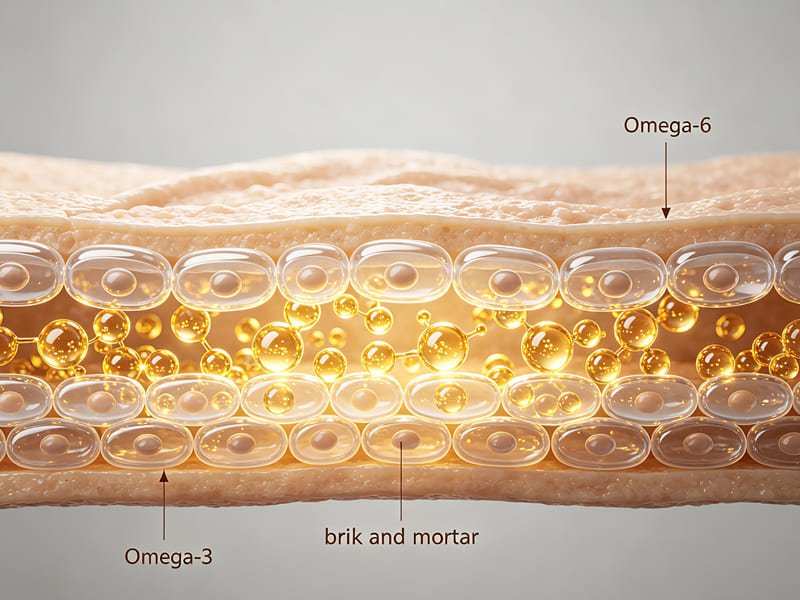
Skincare is essentially a form of “cellular communication.” When you apply an oil, you aren’t just wetting the surface; you are sending a message to your skin cells. Rosehip oil’s message is one of repair and resilience. To understand why it is so effective, we have to look at the three major pillars of its molecular makeup: Essential Fatty Acids, Retinoids, and Antioxidant Armor.
The Fatty Acid Trinity: Omega 3, 6, and 9
About 77-80% of rosehip seed oil is made of polyunsaturated fatty acids (PUFAs). These are the “good fats” that your body cannot produce on its own.
Linoleic Acid (Omega-6): This is the hero for acne-prone skin. Research indicates that individuals with chronic breakouts often have “sticky” sebum that is low in linoleic acid. When you apply rosehip oil topically, you rebalance this lipid ratio. The result? Your natural oils become thinner and more fluid, making them less likely to get trapped and form blackheads.
Alpha-Linolenic Acid (Omega-3): This is the master of anti-inflammation. It helps modulate the skin’s immune response. For people suffering from rosacea or seasonal sensitivity, Omega-3 acts as a “calming signal” that reduces surface redness and heat.
Oleic Acid (Omega-9): While present in smaller amounts, it enhances the skin’s permeability. It makes sure that the other vitamins don’t just sit on top but actually travel deep into the dermis.
Natural Trans-Retinoic Acid (tRA)
This is the “secret sauce” that earns rosehip oil the title of “Natural Retinol.” Unlike synthetic Vitamin A, which often causes the skin to peel, natural tRA binds directly to retinoid receptors in your cells. This stimulates collagen gene expression. It tells your skin, “Hey, let’s behave like we are 20 years old again.” This process speeds up cell turnover, pushing pigmented, sun-damaged cells to the surface and replacing them with fresh, even-toned tissue.
The Antioxidant Armor: Lycopene & Tocopherol
Rosehip oil is one of the few oils that contains a significant amount of Lycopene (the same powerful antioxidant found in tomatoes) and Anthocyanin. These compounds are your skin’s first line of defense against “Singlet Oxygen”—a particularly damaging type of free radical caused by UV rays. Combined with Tocopherol (Vitamin E), which acts as a natural humectant, rosehip oil creates an invisible shield that prevents oxidative stress from breaking down your skin’s structural proteins.
“True rosehip oil is a living cocktail. It contains Vitamin F (fatty acids) to trap moisture and Vitamin A to rewrite the skin’s history. It is nature’s most sophisticated repair kit.”
III. Anti-Aging & Rejuvenation: Beyond the Fine Lines
When we talk about aging, we are really talking about two things: the loss of moisture and the breakdown of collagen. As we age, our skin produces about 1% less collagen every year after the age of 30. Furthermore, our levels of Palmitic acid (a protective emollient) can decrease by as much as 56% in mature skin. Rosehip seed oil addresses both of these crises simultaneously. It is not just about “filling in” a wrinkle; it is about restoring the skin’s biological capacity to stay young.
Boosting Collagen Gene Expression
While many creams claim to “contain collagen,” the truth is that collagen molecules are too large to actually enter your skin from the outside. The only way to get more collagen is to make your skin produce its own. This is where rosehip oil shines. The natural retinoids in the oil are small enough to penetrate the skin and reach the fibroblasts—the “collagen factories” of your body. Clinical studies have shown that consistent use of rosehip oil for 8 weeks leads to a significant increase in skin elasticity and a visible reduction in “crow’s feet” depth. It makes the skin thicker and more resilient, rather than thin and fragile.
Managing “Crepey Skin” and Elasticity
Have you noticed your skin becoming thin like tissue paper? This is often a sign of a compromised lipid barrier. Rosehip oil’s high PUFA content (77%) helps “fatten up” the spaces between your skin cells. It works as an occlusive sealant, locking in the hydration that usually evaporates. This creates an immediate “plumping” effect that makes mature skin look more vibrant. It is especially effective on the neck and décolletage—areas that are notoriously hard to treat because the skin there is so thin.
Color Correction and Sun Spots
Years of sun exposure lead to “photo-aging,” which shows up as brown spots and uneven tone. The synergistic combination of Beta-Carotene and Vitamin C precursors in rosehip oil inhibits melanin overproduction. It doesn’t bleach the skin; it “normalizes” it. By encouraging faster cell turnover, it helps the skin “forget” the damage of past summers and return to a more uniform, luminous appearance. This is why many dermatologists suggest layering rosehip oil over a Vitamin C serum for a “double-brightening” effect.
| Aging Concern | Biological Mechanism of Rosehip Oil | Results Timeline |
|---|---|---|
| Fine Lines | Natural trans-retinoic acid stimulates fibroblasts | 8 – 12 Weeks |
| Loss of Radiance | Carotenoids and Vitamin C precursors reduce dullness | 4 – 6 Weeks |
| Skin Thinning | Essential fatty acids reinforce the lipid barrier | 2 – 4 Weeks |
| Sun Damage | Lycopene neutralizes free radicals from UV exposure | Ongoing Protection |
IV. Acne, Oily Skin, and Sebum Rebalancing
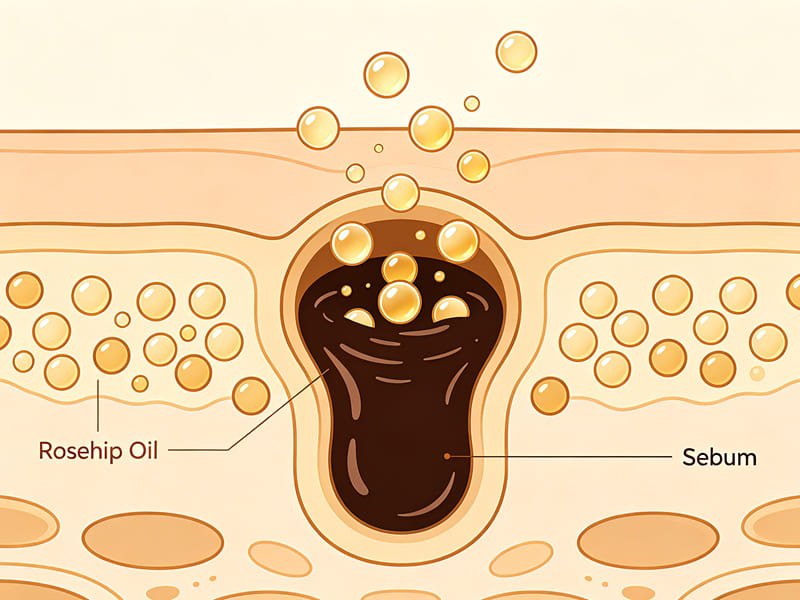
One of the most persistent myths in the beauty world is that people with oily or acne-prone skin should avoid face oils. If your skin is a “breakout queen,” the thought of adding more oil might feel like a leap of faith. But here is the biological truth: your skin produces excess oil because it is trying to compensate for a deficiency. Most acne-prone skin is starving for linoleic acid. When your skin doesn’t get it, it produces “Oleic-heavy” sebum, which is thick, sticky, and acts like a glue that traps bacteria inside your pores. Rosehip oil is the antidote to this sticky situation.
The Sebum Rebalancing Act
Rosehip seed oil is unique because it is a “dry oil.” It is very high in Linoleic acid (45-60%). When you apply it to oily skin, you are effectively “thinning out” your natural oils. This makes your sebum less likely to clog. Instead of fighting your skin with harsh alcohols that strip away all oil (which only makes your skin panic and produce *more* grease), you are giving it the “right” fats. This signals your sebaceous glands to slow down. Many users report that their oily T-zone becomes balanced and matte within just two weeks of switching to a rosehip-based routine.
The Anti-Inflammatory Fire Extinguisher
Acne is fundamentally an inflammatory condition. The red, painful swelling of a cyst is your body’s immune system overreacting. Rosehip oil contains Anthocyanins and Polyphenols that act like a cooling rain on this fire. It reduces the redness and swelling of active pimples without the stinging and peeling associated with benzoyl peroxide. Furthermore, its antimicrobial properties help reduce the population of P. acnes bacteria on the skin surface, preventing new outbreaks from forming.
Fading Acne Scars (Post-Inflammatory Hyperpigmentation)
The nightmare of a breakout often lasts long after the pimple is gone in the form of dark marks or red scars. This is called PIH. Rosehip oil’s ability to heal these marks is scientifically proven. In a 2024 meta-analysis, topical application of rosehip oil was shown to reduce the appearance of inflammatory lesions and scars by up to 42%. It works by providing the building blocks for new, healthy skin tissue to replace the damaged scar tissue. Because it is non-comedogenic (rating of 1), it repairs the damage without causing a new cycle of breakouts.
Pro-Tip for Breakouts: If you are nervous about using oil, start by mixing just one drop of rosehip oil into your oil-free moisturizer at night. This allows your skin to acclimate to the new nutrients without feeling overwhelmed.
V. Scars, Stretch Marks, and Wound Healing
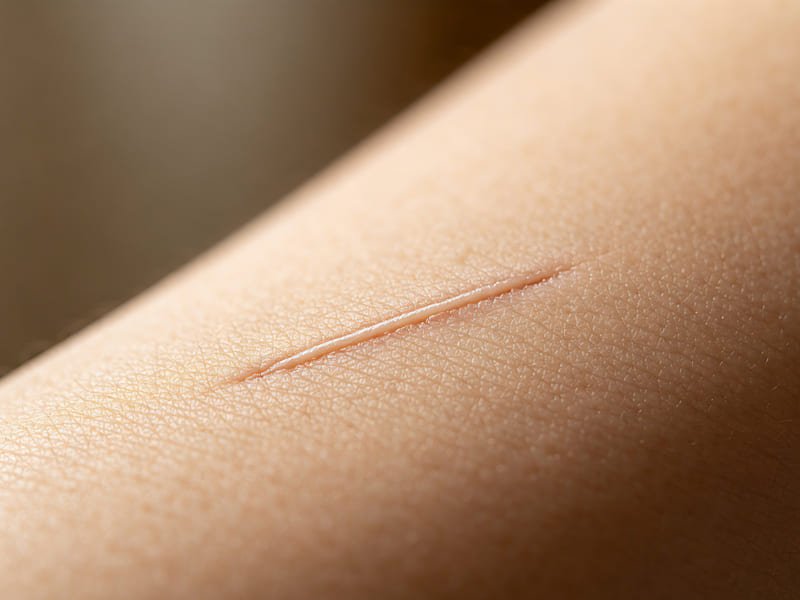
Long before rosehip oil became a celebrity obsession, it was a medical staple for healing. Its ability to repair damaged tissue is so significant that it is often used in clinics following minor surgeries and radiation therapy. The key to its success in scar management lies in its unique ability to regulate the skin’s “healing signals.” If a wound heals too fast or with too much inflammation, it forms a thick, raised scar. Rosehip oil ensures the healing process is smooth, steady, and beautiful.
The 12-Week Transformation
One of the most cited studies in the history of rosehip oil involved patients with post-surgical scars. These individuals applied pure rosehip seed oil twice a day to their incision sites once the stitches were removed. After 12 weeks, researchers observed a dramatic improvement in “scar elevation” (making it flatter) and “scar color” (making it match the rest of the skin). The essential fatty acids in the oil (Linoleic and Linolenic) are vital for epithelization—the process where the skin grows back over a wound. By providing these fats topically, you are giving the skin the “bricks” it needs to rebuild itself without leaving a messy mark.
Supporting the Growing Baby Bump
For expectant mothers, the “stretch” of the skin on the belly is an amazing but stressful transformation. Stretch marks are essentially tiny tears in the deeper layers of the dermis when the skin is pushed beyond its elasticity. Rosehip oil is the top natural recommendation for preventing severe marks. It increases the tensile strength of the skin, making it more like a flexible rubber band and less like a piece of paper that might rip. Massaging the oil into the belly twice a day also helps you connect with your baby through a calming, nourishing ritual. Because our oil at Botanical Extract Factory is organic and mercury-free, it is 100% safe for both mom and baby.
Managing Skin Conditions: Eczema & Psoriasis
For those dealing with chronic conditions like eczema or dermatitis, the skin barrier is often “broken.” This leads to extreme dryness and an insatiable itch. Rosehip oil functions as a lipid-replenishing treatment. It doesn’t just sit on top; it sinks into the cracks of the dry skin to provide immediate comfort. Its anti-inflammatory phenols stop the “itch signal” at the source, helping to prevent the scratching that leads to infections. It is a gentle, natural way to bring the skin back into equilibrium without the side effects of steroid creams.
“Healing is not an overnight event; it is a long-term conversation between the oil and the cells. Patience and consistency are the keys to a scar-free complexion.”
VI. Rosehip Oil for Hair and Scalp: A Garden-to-Bottle Guide
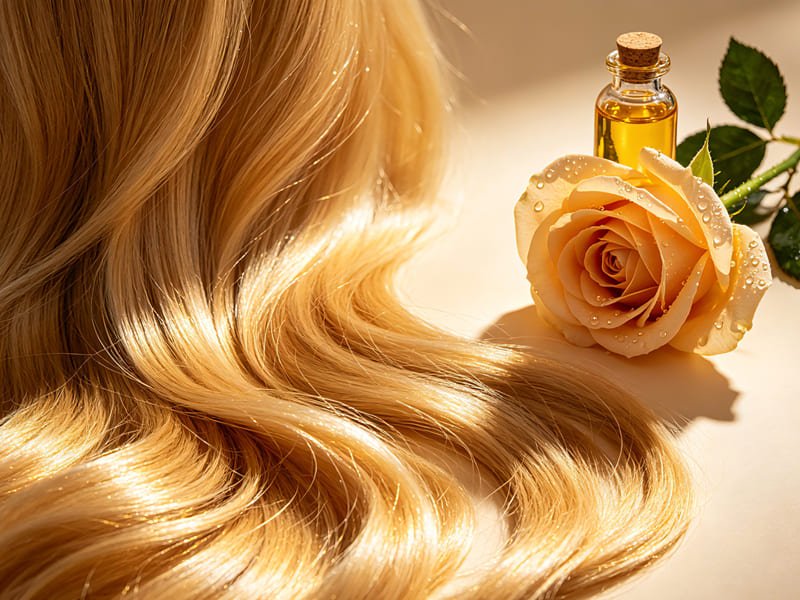
While most of the focus in the beauty world is on the face, your hair and scalp are actually suffering from many of the same issues. Your scalp is simply an extension of your facial skin, and it needs the same fatty acids to stay healthy. In fact, many hair problems—like thinning, dandruff, and split ends—can be traced back to a “starving” scalp and a damaged hair cuticle. Rosehip seed oil is a unique treatment because it is light enough to hydrate without making you look like you haven’t washed your hair in a week. At Botanical Extract Factory, we have seen formulators create amazing results by using rosehip oil to replace traditional silicones in professional hair serums.
Stimulating Follicles and Growth
The research is truly exciting. A 2024 study by Kim et al. found that certain rose extracts can actually stimulate the hair follicles to enter the “growth phase” more effectively. While this study looked at flower water, the seed oil carries the concentrated beta-carotene and tocopherol that follicles need to produce strong, healthy shafts. If your hair feels like it has stopped growing or is becoming thin, massaging a few drops of rosehip oil into your scalp can improve blood flow. Think of it like “fertilizing the soil” of your head. When the scalp is nourished and free from inflammation, the hair grows back thicker and more resistant to falling out.
The Scalp Soother: Fighting Dandruff and Itch
Dandruff is often caused by a combination of a dry scalp and an overgrowth of certain microbes. Because rosehip oil has proven antibacterial and antifungal properties (thanks to its natural phenols), it works as a dual-action treatment. It moisturizes the dry, flaky patches while simultaneously keeping the scalp environment clean. Unlike heavy coconut oil, which can sometimes feed certain types of scalp fungus, rosehip oil is light and balancing. It calms the “fire” of an itchy scalp almost instantly.
DIY Ritual: The “Warm Oil” Treatment
If your hair is very dry, brittle, or has been damaged by chemical dyes, a weekly “Warm Oil” ritual can transform your texture.
The Method: Gently warm about two tablespoons of rosehip oil by placing the bottle in a bowl of warm (not boiling!) water. Apply the oil to mildly damp hair, starting from the roots and working down to the ends. Wrap your hair in a warm, steamed towel and leave it for 30 minutes. This gentle heat helps the linoleic acid penetrate the hair shaft. When you wash it out with a gentle shampoo, you will notice your hair feels softer, looks shinier, and is much easier to comb without breakage.
VII. The Professional Ritual: The “Press and Pat” Masterclass
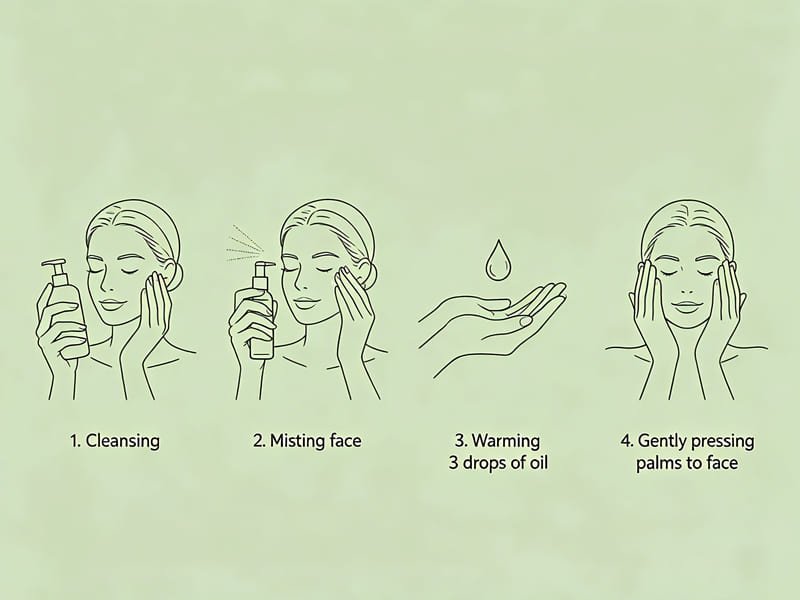
If you have ever tried a facial oil and felt that it just “sat on top” of your skin without sinking in, you were likely missing the two most important secrets of application: moisture and motion. Skincare isn’t just about the product; it’s about how you prepare the canvas. When you have sensitive or reactive skin, every touch matters. Let’s break down the professional masterclass on how to use rosehip oil for maximum benefit.
The Sponge Analogy: Why Damp Skin is Non-Negotiable
Think about a kitchen sponge that has been sitting on the counter all day. If it is bone-dry and you spill a drop of oil on it, the oil just beads up on the surface. But if the sponge is slightly damp, it drinks up the oil instantly. Your skin works in exactly the same way. This is why you should always apply rosehip oil to damp skin.
The moisture on your face acts like a “train” that carries the oil molecules deep into your epidermis. If you don’t want to use plain water, a calming mist (like rosewater or chamomile hydrosol) is the perfect partner. It adds an extra layer of antioxidants and balances your pH before the oil creates its protective seal.
The “Press and Pat” vs. The “Rub”
Most people apply skincare like they are scrubbing a floor. This aggressive rubbing pulls at the delicate skin, especially around the eyes, and can actually cause inflammation—the very thing we are trying to fix!
The professional way is to put 2-3 drops of oil in your palm, rub your hands together for 5 seconds to warm the oil, and then gently press your palms into your face. Hold for two seconds on the forehead, two seconds on the cheeks, and two seconds on the chin. This “pressing” motion encourages the oil to enter the pores through the natural heat of your body. It is a calming, meditative act that tells your nervous system to relax.
Morning vs. Night: Choosing Your Window
While you can use rosehip oil at any time, it is most powerful at night. While you sleep, your skin enters a “repair cycle.” It is busy fixing the damage from the day’s sun and pollution. By applying rosehip oil as the very last step in your evening routine, you are providing the “raw materials” (Vitamin A and fatty acids) your skin needs to build new cells.
If you use it in the morning, remember that rosehip oil is a “dry oil.” It absorbs quickly enough to go under makeup, but it must be followed by a high-quality SPF. The natural retinoids in the oil can make your skin slightly more sensitive to the sun, so protection is vital.
| Step | Professional Action | Why it works |
|---|---|---|
| 1. Prep | Cleanse with pH 5.5 wash | Protects the acid mantle |
| 2. Hydrate | Leave skin damp or use mist | Increases oil absorption by 200% |
| 3. Warm | Rub 3 drops in palms | Activates the enzymes and fats |
| 4. Apply | Gently press and pat | Prevents friction and redness |
| 5. Layer | Follow with moisturizer | Creates a ‘seal’ to stop water loss |
VIII. Comparative Analysis: Rosehip vs. The World
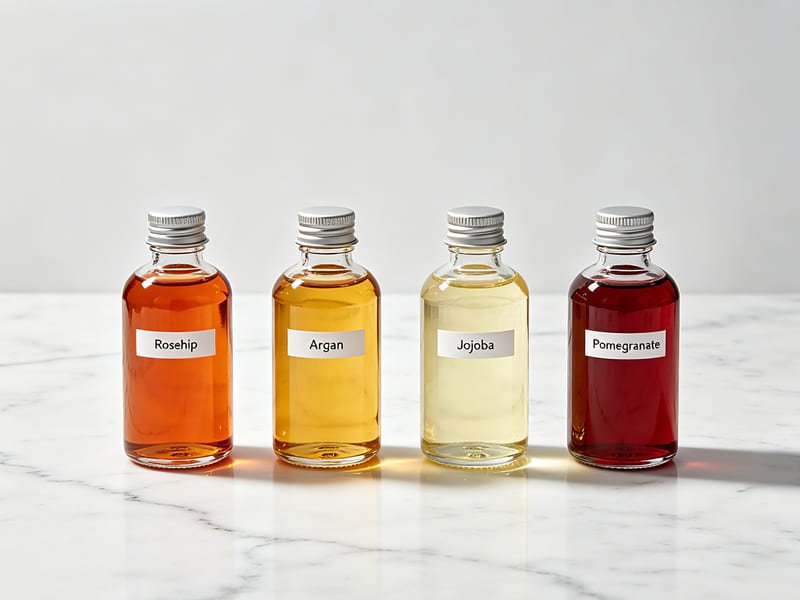
With so many “miracle oils” on the market, it is easy to get confused. Should you choose Argan, or is Marula better for you? Is Rosehip really the king of anti-aging? To answer these questions, we have to look at the chemical “personality” of each oil. Every person’s skin is a unique ecosystem, and what works for a friend might not work for you. Let’s compare rosehip to its most popular competitors.
Rosehip vs. Argan: The “Dry” vs. “Heavy” Battle
Argan oil is often called “liquid gold.” It is wonderful, but it is very high in Oleic acid. This makes it feel rich and heavy. If you have very dry, mature skin (age 60+), Argan is a great choice. But if you have combination skin or are prone to breakouts, Argan can sometimes feel too greasy. Rosehip oil is higher in Linoleic acid, which gives it a “dry” feel. It sinks in faster and is much better for repairing texture and fading dark spots. If you want a dewy look without the oiliness, Rosehip is the winner.
Rosehip vs. Jojoba: Balancing vs. Rebuilding
Jojoba oil is technically a liquid wax. It is very similar to your skin’s own sebum. It is the best choice for “balancing” skin that is confused about how much oil to produce. However, Jojoba doesn’t have the high levels of Vitamin A (Retinoids) that rosehip has. Jojoba is great for maintenance, but Rosehip is a “treatment oil” that actively rebuilds collagen and fixes scars.
Rosehip vs. Pomegranate: Renewal vs. Protection
Pomegranate seed oil is famous for Punicic Acid (Omega-5). It is a very thick oil, excellent for deep hydration in harsh winters. Rosehip is better for “renewal.” If your goal is to brighten a dull complexion or smooth out fine lines, the Vitamin A in rosehip is more effective. Many DIY enthusiasts blend 50% Rosehip with 50% Pomegranate to get the best of both worlds: the light renewal of rosehip and the thick protection of pomegranate.
“Don’t chase the trend; chase the fatty acid. If you need barrier repair, look for Linoleic (Rosehip). If you need heavy sealing, look for Oleic (Argan). Knowledge is the most important ingredient in your routine.”
IX. The Buyer’s Guide: How to Find the Real Chilean Treasure
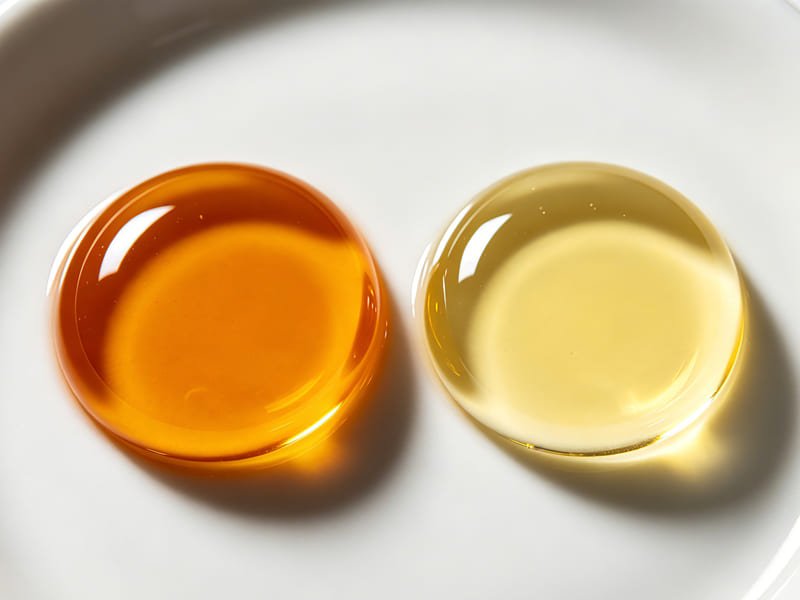
Because rosehip oil is a “bestseller,” the market is flooded with low-quality, refined, or even fake oils. If you buy a cheap bottle, you aren’t just losing money; you are missing out on all the benefits we have discussed. Refined oils have been “bleached” and “deodorized” with high heat, which kills the vitamins. Here is the expert checklist for finding high-purity oil from a trusted source like Botanical Extract Factory.
1. The Visual Test: Amber is Gold
High-quality, unrefined rosehip seed oil should be a deep golden, amber, or even reddish-orange color. This color is the physical proof that the carotenoids (Vitamin A) are still alive in the oil. If the oil is clear, pale yellow, or light red, it has been over-processed. You are basically buying “dead oil” that won’t do much for your skin.
2. The Scent Test: earthy, Not Rosy
This is the most common mistake! People buy “rosehip oil” and expect it to smell like a bouquet of roses. It should not smell like flowers. Real rosehip seed oil has a very mild, earthy, slightly nutty, or even “fishy-tea” scent. This is the natural smell of the seeds and fatty acids. If your oil smells like sweet perfume, it has added fragrances that can irritate sensitive skin. If it smells like “old frying oil,” it is rancid and should be thrown away immediately.
3. The Packaging: Amber Glass is Mandatory
Rosehip oil is incredibly sensitive to light and air. It is like a delicate vampire; if it sees the sun, it dies. Never buy rosehip oil in a clear plastic or clear glass bottle. High-purity producers always use dark amber, cobalt blue, or black violet glass. This protects the oil from oxidation. We also recommend buying smaller bottles (30ml) rather than giant ones, as the oil stays freshest when the bottle is opened and closed quickly.
4. Certification Literacy
Look for the words “Certified Organic” and labels like ECOCERT, COSMOS, or USDA. This ensures that no harmful pesticides were used on the rose bushes. Also, check for “Cold-Pressed” or “CO2 Extracted.” If the label is vague or doesn’t mention the extraction method, it is likely a low-quality solvent-extracted oil.
The “Burp” Test for Freshness: If you apply a drop to your skin and it feels “sticky” or tacky after 5 minutes, it is likely refined or old. Pure, fresh rosehip oil should feel like a “dry” silk that melts into your skin almost instantly.
X. Formulator’s Corner: Blending for Stability
If you are a professional formulator or a DIY lover, you should know that rosehip oil is a “high-maintenance” ingredient. Because it is so high in Omega-6, it can go rancid in just 6 months if not handled correctly. However, there are ways to make it stay potent for up to 2 years.
The 10% Rule: For most creams and lotions, a 10-20% concentration of rosehip oil is the “sweet spot.” It provides all the clinical benefits without making the product unstable.
Antioxidant Synergy: Professional chemists always add a small amount of Vitamin E (Tocopherol) or Rosemary leaf extract to their rosehip blends. These act as “sacrificial antioxidants”—they fight off oxygen so the rosehip oil doesn’t have to. Blending rosehip with very stable oils like Meadowfoam or Jojoba also creates a “buffer” that extends the shelf life significantly.
Your Rosehip FAQs
1. Can I use rosehip oil on my face every single day?
Yes, absolutely. For most people, using it once a day in the evening is the best way to support the skin’s repair cycle. If you have very dry skin or live in a cold climate, you can use a few drops in the morning as well. Just introduce it slowly if your skin is particularly reactive.
2. Is it safe to use rosehip oil around my eyes?
It is one of the best things you can put near your eyes! Because it is a “dry oil,” it won’t cause the tiny white bumps (milia) that heavy eye creams often do. The Vitamin K and Vitamin A work together to firm up the thin skin and lighten dark circles. Just be careful not to get it *in* your eyes.
3. Will rosehip oil make my acne worse?
No. In fact, for many people, it is the cure. Because it is high in Linoleic acid, it helps thin out your skin’s natural “sticky” oil. It has a comedogenic rating of 1, meaning it is very unlikely to clog pores. Most people with acne see a 40% improvement in their breakouts after 12 weeks of use.
4. Why does my rosehip oil smell a bit like hay or fish?
That is actually the smell of quality! Pure, unrefined rosehip oil has a naturally earthy, nutty, or slightly “grassy” scent. It should never smell like roses. If it smells very strong and “sour,” it might be rancid, but a mild earthy smell is a sign that it is pure and unrefined.
5. Does rosehip oil contain actual Vitamin C?
This is a common myth. While the fresh rosehip fruit is one of the highest sources of Vitamin C, Vitamin C is water-soluble. When the oil is pressed from the seeds, the Vitamin C stays behind in the fruit pulp. However, the oil contains Vitamin C *precursors* and fat-soluble antioxidants that provide the same brightening benefits.
6. Can I use rosehip oil if I am pregnant?
Yes, it is highly recommended. It is a natural, chemical-free way to maintain skin elasticity and prevent stretch marks. It is also safe for breastfeeding mothers. Many women call it their “pregnancy glow secret.”
7. How should I store my rosehip oil?
Treat it like a fine wine. Keep it in a cool, dark place away from the steam and heat of the shower. If you live in a very hot climate, storing it in the refrigerator is the best way to ensure it stays potent for the full 12 months.
8. Can I use it with Retinol or Vitamin C serums?
Yes! It is a “team player” ingredient. It can actually act as a buffer to help your skin tolerate strong Retinol or Vitamin C without the usual redness or peeling. Always apply your water-based serum first, wait 2 minutes, and then press the oil on top.
Conclusion: The Future of Your Skin Starts with Purity
In this journey through the world of rosehip seed oil, we have seen that the most powerful solutions often come from the simplest sources. From the cold mountain air of the Andes to the molecular repair of your skin barrier, this “Super Oil” provides a bridge between ancient herbal wisdom and modern dermatological science. We have explored how its unique ratio of fatty acids can heal acne, how its natural retinoids can rewrite the signs of aging, and how its antioxidants can shield you from the modern world. The value of rosehip oil isn’t just in its vitamins; it is in its ability to respect the skin’s natural balance and bring it back into equilibrium.
At Botanical Extract Factory, we believe that the integrity of the ingredient is the most important part of any beauty routine. We are dedicated to providing the cleanest, most potent botanical extracts to ensure that every drop of oil you use is full of life and healing power. Whether you are building a new luxury brand or simply looking for the best possible care for your own skin, we are here to support your journey. The desert miracle of rosehip is proof that nature has already provided everything we need to be vibrant and healthy. We invite you to experience this transformation for yourself. Your skin has been waiting for the “Liquid Gold” of the Andes—now, it is finally within reach.